
Urushi et Kintsugi
Martine Rey
Laqueur artist
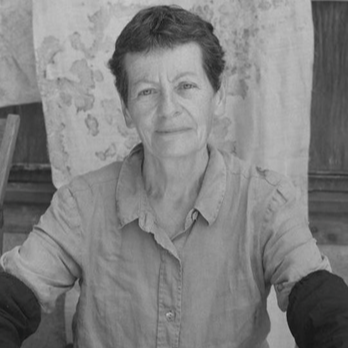
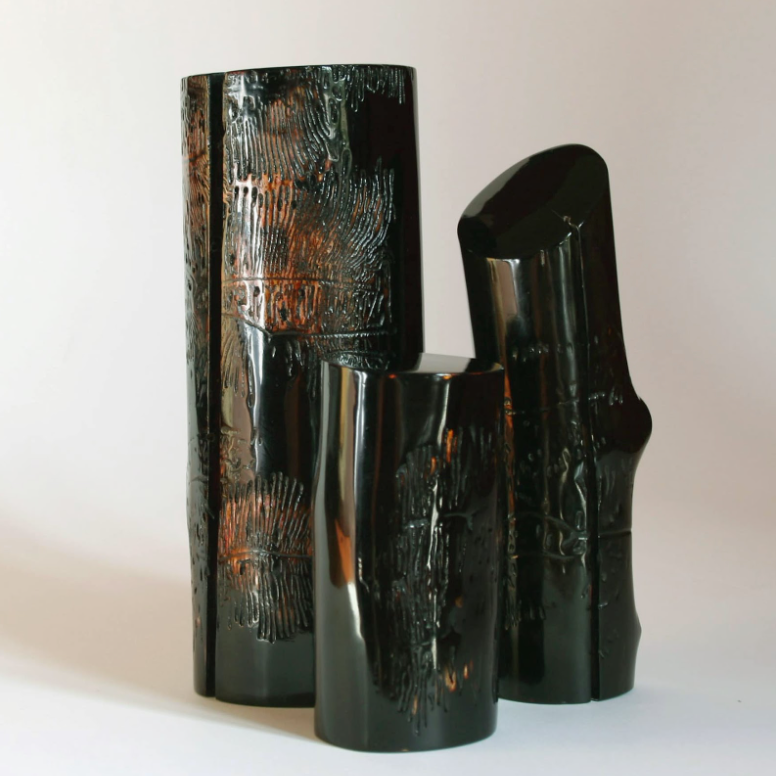
"Since 1979, after an apprenticeship with a master lacquerer in Kyoto, I have been working with this noble material, urushi. One of its applications is kintsugi, an ancestral Japanese practice that involves repairing wounds with the most precious of materials, gold, and give life to what has been broken."
-Martine Rey, laqueur artist
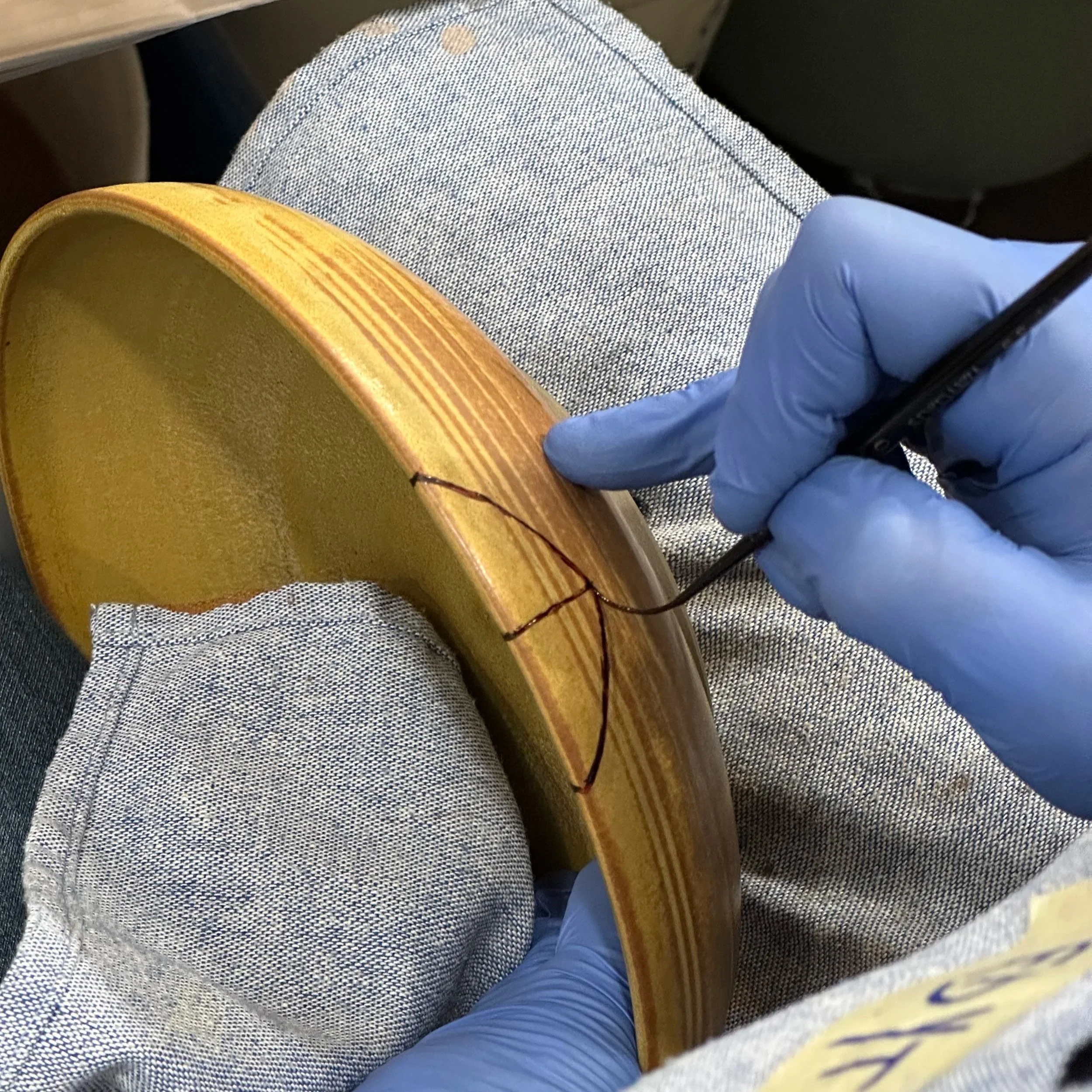
Introduction to traditional and modern working methods using urushi, a natural plant-based lacquer used, among other applications, in the repair of various objects and ceramic pieces with gold and other metals.
Urushi and Kintsugi Training with Martine Rey
According to the tradition of the Kyoto School in Japan.
-
Course Structure
The training begins with an introduction to urushi, a natural plant-based lacquer. A brief historical overview will place urushi within its cultural heritage, followed by an exploration of its properties: general characteristics, the polymerisation process through which it hardens, its advantages, and the diversity of its applications. Objects made with urushi will be presented as a source of inspiration for the practical work ahead.
Projects and Practical Work
Throughout the course, each participant will work on at least two projects simultaneously. Several lacquering techniques will be introduced and practised.
First project – wooden bowl
A wooden bowl, provided at the beginning of the course, will serve as the basis for learning the technique of fuki-urushi (wiped lacquer). This technique involves applying numerous successive layers of lacquer, with drying and sanding between each layer to build up a smooth, hardened surface.
Second project and further projects – object repair
Participants will then be able to work on an object of their choice: ceramic, glass, or another item requiring repair. Clay-based compounds used to consolidate and restore damaged pieces will be introduced and applied in practice.
Creative Explorations
The training will also explore the possibilities offered by dry lacquer, particularly on textile or paper supports, opening up a broad field for experimentation and creative expression.
Daily Guidance
Each day will begin with a group discussion to identify the steps required to move the individual pieces forward, both technically and artistically. As every object is unique, particular attention will be given to each participant’s project throughout the training.
Finishing Techniques and Kintsugi
Towards the end of the training, the finishing stages will be explored in order to understand how an urushi project is brought to completion.
When the final finish is made with gold powder, the technique is known as kintsugi; when silver is used, it is referred to as gintsugi. Depending on the desired aesthetic, a black or coloured lacquer finish may also be chosen.
-
Participation Requirements
To take part in this course, participants are encouraged to have some experience or confidence with hands-on work, as well as an interest in lacquer techniques or object repair.
As places are limited, you will be asked to provide a short statement describing your motivation before registration. This will help us better understand your expectations and prepare the course to best suit your experience and interests.
-
TBD
-
The materials required for the training will be provided. However, please bring the following:
Around 3 damaged or “wounded” objects that you would like to repair during the week. Please avoid objects that are broken into too many pieces.
Various material samples and a few everyday objects—such as pieces of wood, paper, leaves, plants, etc.—on which you can experiment with lacquer and observe how urushi behaves and transforms according to the substrate.
1 apron or work clothes that can get dirty.
A few old bath or beach towels, which will be used to maintain humidity during the polymerisation process.
Soft cloths, such as old sweaters, towels, worn sheets, etc.
One box of gloves in your size. Urushi can cause allergic contact dermatitis, so gloves should be worn when handling the lacquer until it has fully cured.
Note: For health-related recommendations such as the use of homeopathic products, it would be preferable to have the advice reviewed by an appropriate healthcare professional before including it in the English course materials.
Would you like to take part in the next session with Martine?
Fill in the form to subscribe to our mailing list and be informed of upcoming dates.